Preface
The water is running out.
California's official state water strategy requires 500,000 acres of Central Valley farmland to become desert by 2030, because that is the only way to ensure everyone else has enough to drink. Phoenix has banned new housing development. Tucson has banned new housing development. Las Vegas has banned new housing development. Not because of zoning politics, but because the cities do not have enough water to supply new homes. And even Florida — a state nobody associates with drought — has 14 million acres of farmland in drought and 30,000 acres of Miami-Dade County that burned to the ground because there wasn't enough water.
Droughts exist because I am currently failing at preventing them from occurring.
Augustus DorickoRelentless
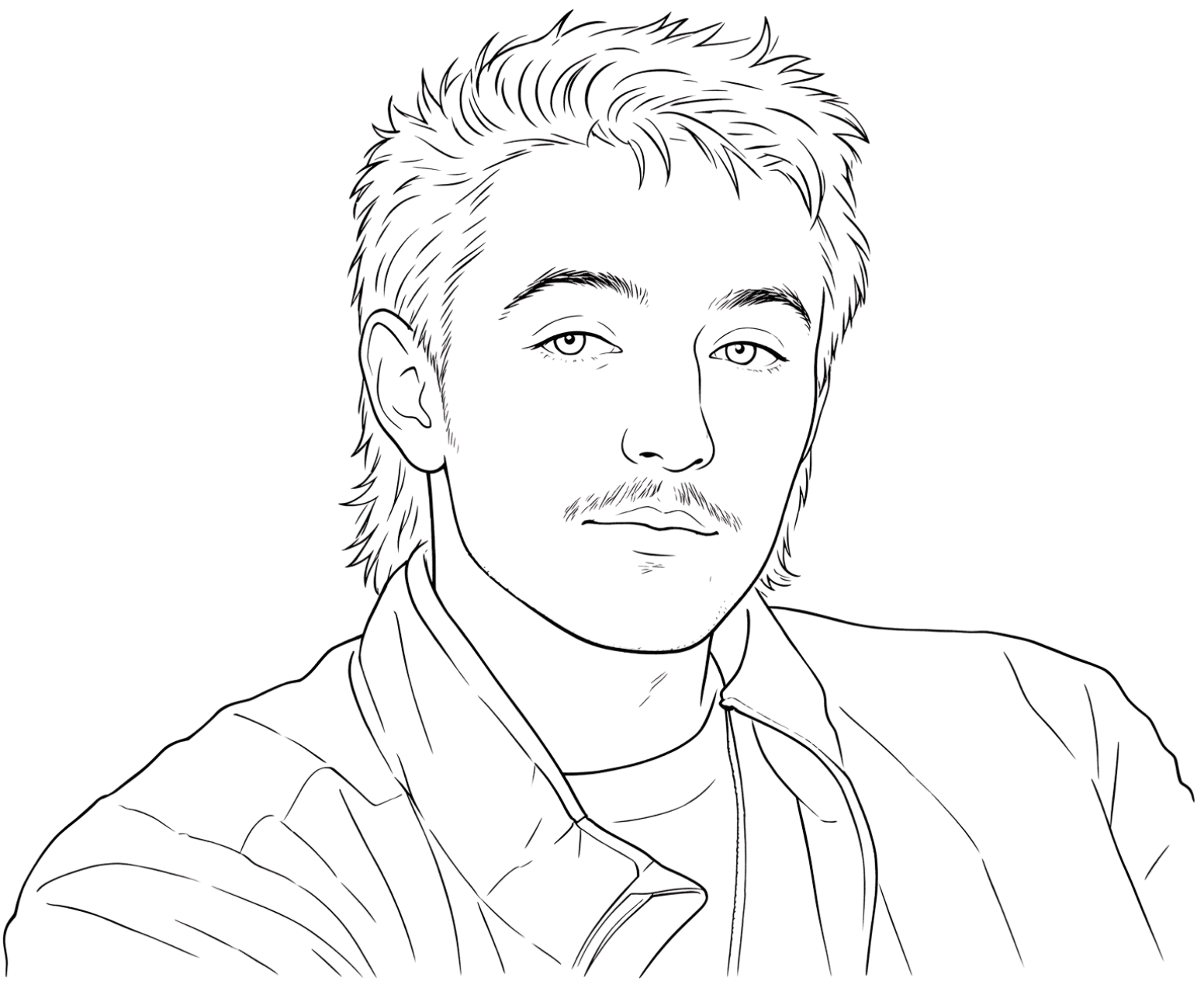
Augustus Doricko is twenty-five. He grew up playing video games in Connecticut. He now runs Rainmaker Technology Corporation, a company that sends autonomous drones into winter storms to seed clouds — the largest cloud seeding program in the United States in fifty years.
How He Got Here
He didn't plan any of this. He says so constantly, with a kind of bewildered gratitude. He grew up in Stamford, Connecticut, sailing, reading philosophy, and playing a video game called Spore where his favorite activity was terraforming uninhabitable planets — adjusting their magnetic fields, generating atmospheres, introducing species. He looks back on this now as a seed of influence on his inclination to start what he calls a terraforming company. His father built data centers. His mother, who is French, was a pattern maker for a fashion house before staying home to raise him. He describes his childhood self as a pretty big dork. He went to Berkeley to study physics.
The reason he chose physics matters. He grew up an atheist:
Augustus DorickoShawn Ryan Show
Then the pandemic hit. He left Berkeley for Connecticut, realized pretty quickly he wasn't going to die from COVID and didn't like being locked in his house, and moved to Fort Worth. He was doing school online, coding as a data scientist, and became a personal trainer at a gym to meet people. Of the three, the gym was the most productive by far. There he befriended the biggest water well driller in the Dallas-Fort Worth area. That driller taught him about the Western U.S. water crisis — how most aquifers west of the Mississippi are either totally depleted or in a state of managed depletion, how America is thirty to sixty years from a Dust Bowl squared event, how the regulatory response is to restrict how much water people are allowed to use and then watch the farmland die.
And somewhere in this period, the question he had taken to Berkeley got answered. Jordan Peterson's biblical lecture series led him to the Bible:
Augustus DorickoShawn Ryan Show
He was baptized on April 10, 2021.
He and the well driller co-founded a company called Terraseco to automate groundwater regulatory compliance — replacing the old process of driving trucks to wells and reading analog meters by hand with internet-connected flow sensors and backend software that Doricko wrote himself. He told his friends at Berkeley he had a software company on the side:
Augustus DorickoShawn Ryan Show
The company worked. But every single customer said the same thing: "It's great that I know how much water I'm using, but I really just wish that I had more water".
He looked into desalination. Impractical for landlocked states — you can't pump water 300 miles inland over two mountain ranges with any sane unit economics. Then he found cloud seeding. It had existed since 1946. It seemed as exciting as rocketry or fission — rocketry gets you to other planets, fission gives you free energy, and weather modification should be able to terraform the planet. But:
[I thought if cloud seeding is] not ubiquitous, then it must just be fake.
Augustus DorickoATOMIC-6
He sold his interest in Terraseco and moved to Los Angeles. He had already incorporated Rainmaker in March 2023, but was still debating whether it would be a cloud seeding company or something else. Then he went to the Weather Modification Association conference in Aurora, Colorado, in April — two or three dozen professors working on a topic most academics won't touch, who had been researching forever. And there he found the answer to both questions at once — the technology had always worked; what had never worked was proving it. Cloud seeding works by finding clouds with water droplets too small to precipitate naturally and dispersing particles like silver iodide that the water freezes onto, creating snowflakes heavy enough to fall. The problem was that nobody could prove the resulting snow was manmade rather than natural. The SNOWI Project had demonstrated that with the right wavelength of radar, you could measure precipitation downstream of a seeding aircraft and perfectly differentiate between the two. For eight decades, cloud seeding couldn't prove its value proposition. Now it could. The company had its direction.
Augustus DorickoATOMIC-6
Gibson is the co-founder of 1517 Fund — named after the year Martin Luther posted his 95 theses — a venture fund that backs founders who don't need a degree to build something great. Gibson was formerly the vice president of the Thiel Fellowship, and the connection eventually led to Doricko becoming a 2024 Thiel Fellow himself, one of twenty selected from tens of thousands of applicants. His pitch to Peter Thiel: "We're gonna turn all the deserts green".
What He Believes
The baptism preceded the company by two years. The theology preceded the business plan at every turn.
His central conviction is stewardship. He points to Genesis — the first commandment given to humanity, before the Fall, was to tend the garden:
Augustus DorickoAmerican Moment
When people tell him that modifying the weather is playing God, he turns the accusation inside out:
Augustus DorickoProduct Market Fit podcast
He grants the danger underneath the charge — hubris has led to many missteps in the past. But the neglect is what bothers him more. He argues from Genesis 1:26 — the command to take dominion over the Earth, including the skies and seas, not just the land. We build cities. We clear forests. We dam rivers. These are considered reasonable. But we do almost nothing about the sky.
Augustus DorickoAmerican Moment
Rainmaking, in his telling, is not an invention. It is a resumption. All throughout human history, he points out, people prayed for rain, danced for rain, made sacrifices for rain — and it is peculiar that we now, with more means than humanity has ever had before, are less interested in trying. Rainmaker's first drone carries the memory in its name: the Elijah, an homage to the prophet who prayed for rain and received it.
He calls Rainmaker the highest-leverage means he could find to serve God and build the Kingdom on Earth.
Augustus DorickoAmerican Moment
The Right Stuff
Doricko's operating philosophy has a name: radical ownership. He draws it from Tom Wolfe's The Right Stuff, the book about early test pilots who flew machines at the absolute cutting edge of propulsion and design. When a pilot crashed and died, the other pilots never blamed the engineers, the weather, or the commanders. The onus was always on the pilot to identify the problem, fix it, and handle it to the ground despite all the odds. That was the right stuff. Radical ownership.
But Doricko extends this beyond the cockpit. Where stoicism draws a circle around what you can and cannot control, Doricko refuses to draw the circle at all:
Augustus DorickoRelentless
Hurricanes exist because he hasn't stopped them yet. Every single problem that exists in the world is a consequence of his failure to solve it. He said this a year into building Rainmaker, and he has said it in nearly identical words every year since. He acknowledges the framework might sound stressful, burdensome, even grandiose. He insists it is the opposite — a disposition built on the conviction that you owe the world your maximum effort, that bearing the heaviest weight you possibly can is what it means to fulfill the divine image within you.
Augustus DorickoRelentless
But the failure never becomes a reason to attempt less — only to repent and attempt more. Every month at Rainmaker, he says, feels like a thousand years.
The Diagnosis
Doricko sees a civilization that has forgotten how to build. The evidence is simple:
Augustus DorickoThe Pamphleteer, Nashville
He was born in 2000. He has lived his entire life in this stagnation.
Augustus DorickoNew Founding Podcast
He locates the cause not in regulation or capital allocation or demographics but in something deeper — a loss of purpose. People optimize ad spend. They reshuffle fourth-order derivatives on corn futures. Nobody is building the glorious space-faring future envisioned by Isaac Asimov. And the longer this goes on, the more entrenched the fixed-pie worldview becomes — the longer people go without seeing futuristic technology breakthroughs, the more they believe such breakthroughs are impossible, which suppresses the ambition to build them.
Secular frameworks, he believes, cannot break the cycle. Effective accelerationism — the Silicon Valley philosophy of pushing technology forward as fast as possible — is insufficient because it lacks a soul. He said this in August 2023, five months into building Rainmaker:
Augustus DorickoPirate Wires Podcast
He points out that the people who built the Apollo program and the atom bomb were deeply religious. America's technological golden age coincided with transcendent motivation. Its stagnation coincides with the loss of it. The prescription is not nostalgia — not apple pies on the windowsill — but rather: old truths fused with modern capabilities, aimed at a future worth sacrificing for.
The Book of Esther gives him his frame. Mordecai tells Esther, who is distraught about political turmoil, "Perhaps you've come to the kingdom for such a time as this." Doricko turns this into a generational call:
Augustus DorickoJason Carman
Subscribe for the next portrait
People, from their own words.
Terra Punk
The word Doricko uses for his vision is terra punk. It means choosing abundance over restriction. It means building supply instead of cutting demand.
He tells a story in two eras. In the 1920s through the 1970s, when Americans faced water shortages, they built — the Hoover Dam, the California State Water Project, the Edmonston Pumping Plant with its 48,000-horsepower engines pumping water 2,000 feet over the Tehachapi Mountains. That was terra punk. That was the engineering-forward response to scarcity. Today's response is the opposite: destroying millions of acres of farmland, banning lawns in favor of rocks and AstroTurf, mandating low-flow toilets. That is the Malthusian response. The conservation-first, degrowth-compatible, accept-scarcity-as-permanent response.
Doricko rejects it entirely. He dismisses Jeff Bezos's claim that Earth can't support a much larger population without going multi-planetary:
Bezos is wrong. The carrying capacity of Earth is whatever we want it to be.
Augustus DorickoProduct Market Fit podcast
If you turn deserts into arable land — and he believes cloud seeding, soil amendment, and atmospheric engineering can do exactly that — then 100 billion people could thrive on Earth with plenty of living space. He loves SpaceX. But he also believes the planet we're standing on has barely been used, and that the technologies to transform it have existed for decades, requiring only the collective will to act. When pressed on what this means in practice, he goes straight to the most contested crop in California water politics:
Augustus DorickoNew Founding Podcast
His personal measure of success is simpler:
Augustus DorickoAccelerate Bio
He has thought about what could go wrong. He knows, for instance, that dust from the Sahara crosses the Atlantic and acts as cloud condensation nuclei that drives rainfall over the Amazon — which means greening the Sahara might reduce precipitation in South America. The distance between "whatever we want it to be" and "cascading effects need careful modeling" is real, and he does not collapse it. But his resolution is not paralysis. It is the observation that unintentional modification is already happening everywhere — coal plants, ship tracks, urban heat islands — and it's going to happen one way or another; it's just a question of whether we're doing it deliberately or not.
We're Not Miracle Workers
Augustus DorickoShawn Ryan Show
He puts it bluntly: they're not miracle workers, and they can't make it rain out of nothing. He volunteers the statistician's objection before anyone raises it — no two clouds or valleys are alike, so a robust comparison needs thousands of seeding runs. And he concedes the size of the current effect in numbers a marketing department would never choose:
Augustus DorickoPOD OF JAKE
The man who says the carrying capacity of Earth is whatever we want it to be also says the technology currently produces less than an inch. The distance between the two is where the actual work of building Rainmaker lives.
And then there is the question his critics reach for first: if you rain a cloud out over one valley, who loses the rain downwind? He calls it the industry term — "stealing from Peter to pay Paul" — and his answer starts with headroom. Rainmaker seeds only clouds its probes measure as too diffuse to rain on their own.
Augustus DorickoShawn Ryan Show
There is no published science yet suggesting that seeding reduces precipitation downwind. But he puts an expiration date on the reassurance himself, and the comparison he reaches for is the 1974 film about the fight over Los Angeles's water, Chinatown:
Augustus DorickoShawn Ryan Show
Gundo
El Segundo, California. Population 16,000. It hasn't changed since 1960. A Chevron refinery on one side. LAX on the other. The constant sound of planes overhead and the hum of industrial machinery underneath. Doricko and his community of hard tech founders do not experience this as noise. They call it the sound of industry.
Augustus DorickoPOD OF JAKE
A compact, walkable neighborhood with an unparalleled density of people working on nuclear energy, missile systems, weather modification, advanced composites, and net-zero hydrocarbon synthesis, all within a few blocks of each other. The community is social in a way that most tech ecosystems are not. Founders lift weights together, have bonfires, and build alongside each other. When Doricko punctured the carbon fiber nose cone on a drone, he walked three blocks to Cambium, a composites company, and got immediate help fixing it.
He sees El Segundo as the product of two forces converging. The first is legacy infrastructure: Rockefeller's second California refinery created machine shops, SpaceX created an engineering talent pool, and NASA's space shuttle program left behind perfectly sized warehouses for pre-seed hardware companies. The second is a spiritual hunger that no amount of SaaS equity could fill:
Augustus DorickoThe Gundo Report
Building hardware that materially affects reality, he argues, satisfies a deep human need that knowledge-economy work cannot. El Segundo is not just a talent hub. It is an answer to the question of what you do after you realize that optimizing someone else's ad budget is no way to spend your life.
The Scapegoat
In July 2025, Doricko's worldview was tested in the bluntest possible way. Rainmaker had conducted a single 20-minute flight in Texas, seeding two clouds with about 70 grams of silver iodide — roughly 10 Skittles' worth. Days later, the remnants of a tropical storm dumped trillions of gallons on the Texas Hill Country. People died. People lost homes. And Rainmaker was blamed.
The math didn't support the blame. Even the best cloud seeding operations ever have produced tens of millions of gallons; the Texas floods produced three to four trillion. Rainmaker had suspended operations a full day before any warning mandated it. The aerosols had long since precipitated out. But the math is not what most people reach for when their houses are underwater and someone on social media says they know who did it.
Doricko and the Texas farmers who hired him received death threats. He says he can handle the personal accusations. The farmers, he says, are totally undeserving of the virulent death threats they've gotten.
Augustus DorickoTim Pool
Where does that empathy come from? He answered before the flood ever happened, in a conversation about his favorite book of the Bible — Hosea, where the prophet was told to marry a woman who would not stop leaving him, and to keep buying her back:
Augustus DorickoJason Carman
Set that beside his post-flood statement that he will keep engaging with critics in good faith, even if people want to burn him because they think he's a witch, and the posture stops looking like public relations. It looks like doctrine, applied under fire.
In May 2024, analyzing the Dubai floods from the outside, Doricko called it more probable than not that the Emirates' aggressive seeding had some relationship to what happened, even if the storm was going to dump rain naturally. By June 2025, asked about the same floods on the Shawn Ryan Show, his emphasis had moved: the system had already flooded Saudi Arabia, Qatar, and Iran, none of those cities had drainage infrastructure, and whether the Emirates cloud seeded or not, it was going to flood the city anyway.
A year of running attribution radar on his own flights sharpened the distinction between contributing to an event and causing one. Weeks after that, his own company was under the same kind of accusation in Texas.
He had been asking for more regulation before the July 2025 Central Texas flooding occurred. A month before the floods, he was already arguing for more stringent federal reporting requirements and acknowledging the conflict of interest that prevents industry players from writing their own regulations. The crisis didn't produce the conviction. The conviction preceded the crisis.
Augustus DorickoTim Pool
He calls the adversarial stance most tech companies take toward regulators a skill issue rooted in Silicon Valley's culture. His alternative: go to regulators, identify shared interests, explain how the technology benefits their constituents, and align the state to the interests of your company to get better outcomes for everybody. By early 2026, the results were in: of 31 states that proposed bans on cloud seeding, 28 either dropped their bills, amended them, or funded new programs.
What It Costs
Augustus DorickoRelentless
Rainmaker's internal culture is built around tolerating — no, embracing — pain. The company moved its entire team to Oregon for six months to test drones, deciding in two weeks and executing immediately. They lived in a cold warehouse. They vertically integrated their entire technology stack — radar, drones, software, nucleation agents — because commercial alternatives either didn't work, cost half a million dollars, or were designed fifteen years ago with twelve-month lead times, and one vendor was literally hit by a bus.
Augustus DorickoRelentless
This is not bravado. Or rather, it is bravado that also happens to describe the actual working conditions of a company that logged 142,000 flight miles in half a year, that operates across six states and the Middle East, that built the only sub-55-pound drone in NATO capable of flying in severe icing — in five months — and that is hiring by asking candidates if they're prepared to live on a mountain for six months.
In the same conversation where he admitted struggling to be a good son and brother, he also said this:
Augustus DorickoRelentless
Why It Matters to Him
Ask Doricko what gives him the most optimism and he gives you two answers. One is cosmic and unshakeable:
Augustus DorickoNew Founding Podcast
The other is immediate and almost startled by its own existence:
Augustus DorickoNew Founding Podcast
He says none of this was planned. Going from where he started to now talking to sovereign nations, operating in Saudi Arabia, and running a program to save the Great Salt Lake — the project he is most proud of and feels the greatest responsibility to deliver.
He sees this less as his accomplishment than as evidence that the opportunity is there for anyone willing to reach for it — that most people's imaginations are the binding constraint, not their circumstances. His advice is self-consciously ordinary: go to church, work out, find aspirational people. He had to hear it a thousand times before he acted on it.
Augustus DorickoNew Founding Podcast