Preface
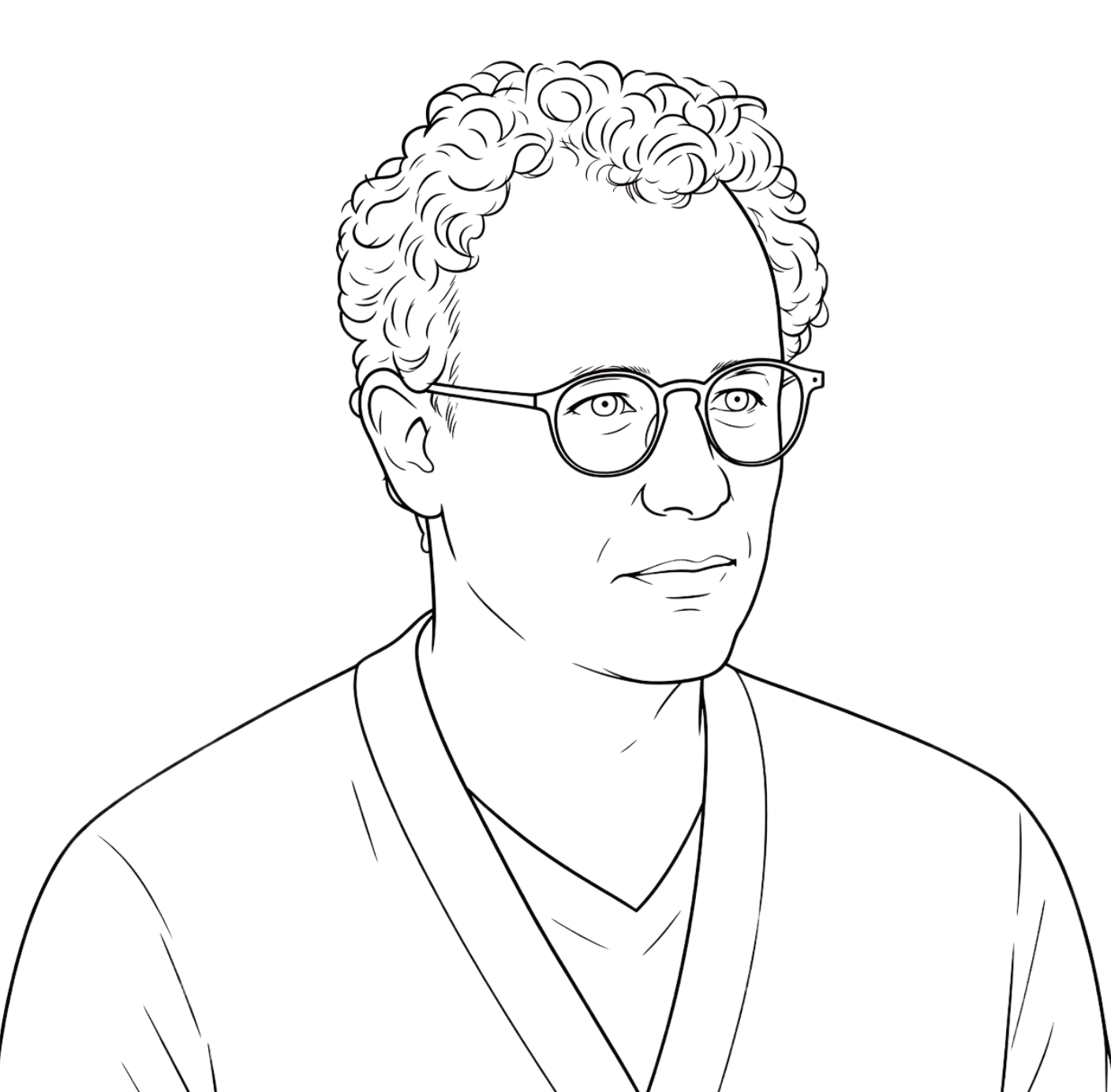
Dario Amodei says something that sounds like it shouldn't be possible. GDP growth of 10 to 15%, while, simultaneously, mass white-collar unemployment. Both within the same decade.
Dario AmodeiBloomberg Live
He is building the technology he believes will cause the disruption, and he insists that the building and the warning are not contradictory but necessary companions.
Growth
The GDP numbers come from the bottom up, not the top down. Amodei doesn't start with a macroeconomic model. He starts with revenue.
Anthropic has grown roughly 10x per year for three consecutive years: from zero to $100 million in 2023, $100 million to $1 billion in 2024, and projecting $8–10 billion by the end of 2025. He suspects the broader AI industry looks similar. A few more doublings and you're talking about trillions of dollars of annual revenue. Against a US GDP of $20–30 trillion, that starts moving the needle on national growth rates by several percentage points.
Dario AmodeiInteresting Times with Ross Douthat
He was making versions of this argument when Anthropic's revenue was still in the hundreds of millions. As each 10x cycle confirmed the next, the projections grew bolder — from trillions within a few years to numbers that could move national GDP.
What interests him most is not the growth itself but what it does to the frame of political debate. We currently argue about growth as if it were scarce, a golden goose that bad policy can kill. In a world of 10–15% GDP growth, that assumption inverts entirely.
Dario AmodeiInteresting Times with Ross Douthat
The budget deficit resolves itself through tax receipts. Distribution, not production, becomes the central political problem.
On inflation, he defers to economists but offers directional reasoning: very large real productivity gains would tend to be deflationary rather than inflationary, since people would be able to do more with less. He envisions AI as a virtual chief of staff for everyone, handling the tasks that currently only executives can delegate — and beyond replacing existing work, enabling entirely new capabilities in biology that could extend people's productive working lives by a decade.
Displacement
Dario AmodeiAxios
The headline prediction: half of entry-level white-collar jobs could be eliminated within one to five years. He always talks about solutions alongside the warning, about comparative advantage and policy responses, but the three-second doom clip is what makes headlines.
He doesn't walk the prediction back. By the time he was reaffirming it months later, external research from Erik Brynjolfsson and others had found that white-collar entry-level jobs had already contracted by 13% — a significant fraction of what he originally predicted, and the clock had barely started.
What worries him is not that disruption will happen. It's the speed.
Dario AmodeiInteresting Times with Ross Douthat
And what compounds the speed is breadth. AI is simultaneously hitting law, consulting, finance, medicine, and coding, transforming what would be a manageable adjustment into a macroeconomic phenomenon. The legal profession illustrates the pattern: AI is poised to eliminate the paralegal and junior lawyer pipeline that traditionally performs behind-the-scenes research, leaving only senior roles involving direct client and courtroom interaction. If the profession had decades, lawyers could evolve into more consultative, client-facing roles. But the reshaping of an industry takes years. The economic forces driven by AI are moving faster.
Comparative Advantage
Amodei doesn't dismiss the economists who say technology creates more jobs than it destroys. He agrees with them, up to a point. And the point has a timer on it.
His primary defense of near-term human relevance is comparative advantage, which he calls "remarkably" and "surprisingly clever". When AI can do 90% of your job, you don't lose 90% of your value. You focus on the remaining 10%, which either expands to fill the entire role or creates new complementary tasks. Even doing just 5% of a task makes you 20 times more productive, because the AI handles the other 95%. The economy is remarkably good at reorienting itself around whatever sliver humans can still contribute.
Brynjolfsson's research reinforces this: enterprises that deploy AI to complement human workers see greater productivity gains than those that deploy it to replace them.
Dario AmodeiBox
But there are two caveats, and he's honest about both.
Dario AmodeiEcon 102 with Noah Smith
Second, powerful market forces push toward replacement even when complementarity is more productive. The default behavior of enterprises, when they deploy AI, is to cut headcount. Anthropic actively pushes customers toward the positive-sum option.
Dario AmodeiWSJ News
The Automation Curve
Inside Anthropic, the transition is already visible. The pattern recurs from one technology wave to the next: automate 90% of a job and workers become ten times more productive in the remaining 10%. But as automation approaches 100%, displacement becomes inevitable. Software engineering at Anthropic has reached the inflection point.
Dario AmodeiBloomberg Originals
The milestones have been passing rapidly. AI writing 90% of code lines — already happened. 100% of code lines — happening. 90% of end-to-end SWE tasks — close. Each milestone is "very different from each other in terms of impact" but the pace through them has been super fast. Some engineering leads at Anthropic don't write code anymore; they let Claude Opus do the work and they edit it.
The centaur chess metaphor keeps coming up. After Kasparov lost to Deep Blue, human-AI teams dominated for 15 to 20 years before pure AI surpassed even centaur play. Software engineering is currently in its centaur phase. The worry is that the period may be very brief — months, instead of decades.
New roles are emerging alongside the displacement. Forward deployed engineers, applied AI solutions architects, jobs that combine technical skills with customer interaction. Not every displaced software engineer fits neatly into these new slots. The pie is expanding and creating new positions, but whether the matching happens fast enough remains the open question.
On blue-collar versus white-collar vulnerability, the timeline surprises people. Blue-collar and trade jobs are more protected in the short term, not less. As AI takes over cognitive work, physical-world tasks become natural economic complements: data centers need electricians, manufacturing plants need construction workers. But the protection is temporary.
Dario AmodeiInteresting Times with Ross Douthat
Subscribe for the next portrait
People, from their own words.
A Zeroth World Country
Amodei's inequality scenario has a name.
Dario AmodeiThe Wall Street Journal
The most eager AI customers are other technologically forward Silicon Valley companies, creating a "closed loop" where AI benefits circulate among the already-privileged. The most educated people are the primary users. The technology's natural diffusion pattern reinforces existing advantage. Amodei has been naming this pattern for years, and the concern has only sharpened as Anthropic's own state-by-state economic data has confirmed it.
When pressed — "In 10 years, will the gap between rich and poor be bigger or smaller?" — he resisted a definitive answer. But when pressed harder, he conceded.
Dario AmodeiNorges Bank Investment Management
The developing world faces a structural version of this problem. The standard mechanism for catch-up growth — bringing capital and know-how to countries with under-utilized labor — breaks down when labor is no longer the constraining factor. Amodei's answer is not philanthropy from wealthy AI beneficiaries but endogenous growth: building data centers in Africa (with local rather than Chinese ownership), establishing AI-driven pharmaceutical and biotech companies in developing regions, and ensuring local humans participate in founding and supervising AI-enabled enterprises.
He predicts these concerns will become bipartisan and universal because everyone will recognize the necessity.
Ideology will not survive the nature of this technology. It won't survive reality.
Dario AmodeiThe Wall Street Journal
A Counterintuitive Preference
With the inequality nightmare in view, one of Amodei's arguments gains context: universal displacement might be better than partial displacement.
The reasoning is social, not economic. If AI randomly automates 50% of jobs while leaving the rest untouched, the implicit message is devastating — half the population has been declared useless, the other half hasn't. That creates class warfare. But if everyone is in the same position, if the technology eventually exceeds all humans at everything, society is forced into a collective reckoning rather than a selective one.
The worst outcome isn't the one with the most total job loss. It's the one that fractures society into castes — those the machines replaced and those they didn't, with no logic to the sorting.
Dario AmodeiCouncil on Foreign Relations
Policy: Measure, Adapt, Intervene
Amodei's policy framework has three layers, arranged in increasing controversy. The framework emerged gradually, but it sharpened once the displacement warnings went public.
Measurement. Anthropic maintains what it calls the Economic Index, using Claude itself to analyze all user conversations in a privacy-preserving manner, tracking whether people use the model to augment tasks or to fully delegate them, which industries are involved, and geographic distribution across states. The rationale: government labor statistics don't move fast enough for this technology's pace. If you can't see the disruption in real time, you can't respond to it.
Adaptation. Here his skepticism shows. He acknowledges real limits to what retraining programs can accomplish — they help, but they can't absorb a disruption this broad. He points instead to platforms like Lovable and Replit, Anthropic customers that let non-engineers build software products and start businesses. But he's honest that this alone won't solve the problem.
Government intervention. This is the controversial layer, and Amodei leans into it. He believes macroeconomic intervention will be necessary and predicts it won't even be a partisan issue as the disruption grows.
Dario AmodeiAxios
He opposes California's wealth tax as poorly designed.
Dario AmodeiBloomberg Live
If AI drives economic growth to 10% annually, the rapidly expanding tax base could provide enormous resources to manage the disruption. Effectively, the technology funds its own transition costs.
Race to the Top
All of this raises the question: why build the thing you're warning about?
The short version: according to Chris Olah (Anthropic co-founder), refusing to build or ceding leadership to others doesn't work because it fails to prove that safe development is possible. The world needs to get from here, where AI doesn't exist at transformative scale, to there, where it does and society has managed it. The only way to demonstrate the path is to walk it. If safety-conscious actors step aside, the decision-makers become self-selected for people who don't care about safety.
Dario AmodeiStripe
In a nutshell: "I don't wanna stop the reaction. I wanna focus it."
He describes a "terrifying situation" where $20 trillion of capital pushes to accelerate AI while Anthropic, at $60 billion, keeps speaking up. US government officials and leaders of $4 trillion companies criticize him. Every time he advocates for export controls on China, opposes moratoriums on AI regulation, or warns about economic disruption, he gets attacked by peers.
His stance is also anchored in personal loss. Family members who died of diseases that were cured just a few years after their deaths. The cost of delayed progress is not abstract.
When Ross Douthat asked directly whether he'd support a mutual US-China slowdown in AI development, Amodei said yes, with the caveat if it were genuinely enforceable with real verification. He noted that during the previous administration, the US reached out to China about AI dangers and received little interest. He compared the challenge to nuclear arms control: decades of protocol development. Saying "we should slow down" is cheap. Actually arriving at a binding, verifiable agreement is another matter entirely.
Dario AmodeiInteresting Times with Ross Douthat
He puts a number on his overall risk assessment: a 25% chance that things go really badly and a 75% chance that things go really well, with not much space in between. His co-founder Jack Clark frames the 25% as a "choice that we make in policy," a dynamic number that advocacy and action can push down. Because it's dynamic, building plus warning becomes the strategy.
What Gets Lost
Displacement isn't just about losing a paycheck. It can be about losing capability.
Anthropic's own studies confirm that some methods of using AI models cause de-skilling while others do not. Students using AI to write essays are basically just cheating on homework. When asked whether AI could make humans measurably less intelligent as a species, Amodei answered without hedging:
Dario AmodeiNikhil Kamath
In his view, de-skilling is not an inevitable consequence of the technology but a failure of deployment — one more bad outcome that's preventable with deliberate action. This pattern repeats across his thinking: the bad version isn't destiny, it's negligence.
Self-Worth
At its deepest, Amodei's economic thinking arrives at a question that isn't economic at all. If AI renders human labor unnecessary — not in a few sectors but across the board — what happens to the relationship between self-worth and productivity?
He's framed this as a Copernican moment, the discovery that tying human self-worth to economic productivity was partly an illusion, like believing the sun revolves around the Earth. Technology may lay bare that illusion. What replaces it is the question he can't fully answer.
Dario AmodeiCouncil on Foreign Relations
He called this "the embryo of an answer." In a later conversation with Oprah, he developed it further, into a sorting principle for which hardships technology should eliminate and which it should leave alone.
Some friction is pointless suffering. His father died almost exactly 20 years ago of a disease for which a more reliable cure was developed just a few years later. That kind of loss, Amodei would erase from the world in a heartbeat.
But other struggles — learning from mistakes, gaining mastery, building relationships — those are foundational. Remove them and you remove what makes life worth living.
"Any future that doesn't preserve [the right kinds of stuggle] is not a good future."
Dario AmodeiOprah